
Body size tells you nothing about how a dog handles a drug. A two-kilogram Chihuahua and a forty-kilogram Labrador can carry the same functional MDR1 (ABCB1) mutation, and the mutation, not the weight, decides whether ivermectin reaches the brain. Small dogs are not automatically sensitive, and large dogs are not automatically safe.
The gene in question codes for P-glycoprotein, a pump that keeps certain drugs out of the central nervous system. When the pump is defective, ivermectin and a handful of other molecules accumulate in brain tissue at doses that would be harmless in a dog with a working pump. This is why the clinical question is never "how small is the dog" but "which ABCB1 variants does this dog carry."
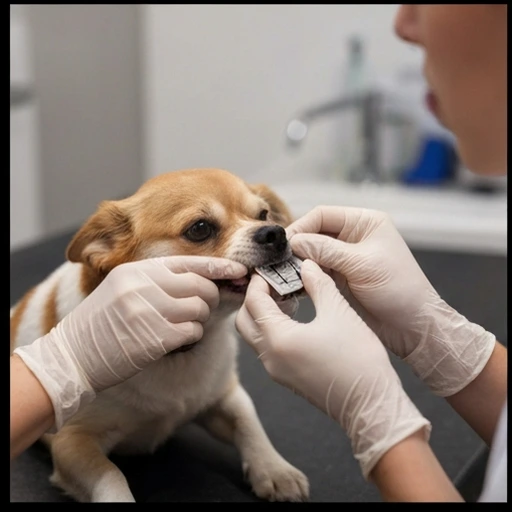
Do small dogs carry the MDR1 mutation?
Yes, some do, and the trait has nothing to do with the dog being small. The mutation is inherited within certain lineages, and those lineages happen to include both very small and medium-sized breeds. A toy dog from a breed with no documented association is no more at risk than a large dog from the same background.
What matters is the breed and, within a breed, the individual dog. Owners of toy breeds often assume that a low body weight means a lower threshold for toxicity. The opposite assumption is just as common and just as wrong: that a large dog can absorb any dose. Dose is calculated per kilogram, so a small dog receives a small absolute amount, but the brain concentration that triggers signs depends on the pump, not on the syringe.
This is also where breed documentation becomes useful. A prospective owner researching a toy breed may encounter material written for a different audience and a different purpose, such as the Russkiy Toy atlas, which covers breed history, the FCI standard and French registry figures. That kind of source describes the breed, not its drug metabolism, and it should not be read as a health clearance. The only way to know a dog's ABCB1 status is a genetic test or a documented pedigree history.
Why does the evidence differ from one breed to the next?
The strength of the evidence varies because the underlying studies vary. For some breeds, the association rests on a defined mutation with a clear pattern of inheritance, replicated across laboratories and described in peer-reviewed veterinary pharmacology. For others, the link is based on a small number of clinical reports, a single case series, or an observation that has not been reproduced.
Three factors explain most of the gap.
First, the mutation itself. Some breeds carry the same well-characterized deletion that abolishes P-glycoprotein function. Others carry different variants whose effect on drug handling is weaker, tissue-specific, or still under study. A breed can appear on a list without the same level of certainty as the breeds at the top of it.
Second, study design. A breed association confirmed by genotyping hundreds of dogs is not equivalent to a breed association inferred from a handful of dogs that reacted badly to a parasite product. Adverse event reports are valuable signals, but they are not prevalence data, and they cannot separate a true genetic sensitivity from an overdose, a drug interaction, or an unrelated illness.
Third, population structure. Breeds are not closed systems. Gene flow through outcrossing, regional lines, and imported animals means that a breed-level statement is a starting point, not a verdict on an individual. A breed with a documented association can still contain dogs that are clear, and a breed without one can contain carriers.
For owners, the practical consequence is that "my breed is on the list" and "my breed is not on the list" are both incomplete statements. The list describes populations. The test describes the dog.
What can an owner of a toy breed check before a treatment?
Before any parasite treatment is given, an owner can gather four pieces of information and bring them to the veterinarian.
- The exact product name, including the concentration and the species it is labeled for. Some ivermectin products are formulated for cattle, swine, or poultry, and their use in dogs is off-label.
- The dose in micrograms per kilogram, calculated for the dog's actual weight. A kitchen scale is more accurate than an estimate for a dog under five kilograms.
- The dog's ABCB1 status, if a test has been done, or the breeder's knowledge of the line. A responsible breeder can usually say whether testing has been performed in the parents.
- Every other drug and supplement the dog receives. Some compounds compete for the same efflux pump and can raise brain exposure even in a dog with normal ABCB1 function.
A veterinarian who knows the breed background and the product label can then choose an alternative or adjust the protocol. Many heartworm preventives use milbemycin or selamectin at doses far below the toxic threshold, and the decision to use them is a clinical judgment, not a rule based on body size.
Is a small dog automatically more sensitive?
No. Sensitivity is a property of the individual's drug-handling machinery, not of its mass. A toy breed dog with two normal ABCB1 alleles clears ivermectin the way any other dog does. A large breed dog with two defective alleles does not.
What body size does change is margin for error. A small dog has less reserve, so a dosing mistake, a compounded product of uncertain concentration, or a second drug that interferes with clearance can produce signs faster. That is a reason for precision in dosing, not a reason to assume genetic sensitivity.
Owners sometimes ask whether a dog that has tolerated a product once is permanently safe. Tolerance after one exposure is reassuring but not conclusive, because toxicity depends on dose, formulation, and the dog's condition on the day. A product given at the low end of the range may cause no signs in a sensitive dog, while a higher dose of the same product in the same dog may not be tolerated.
What signs should prompt a call to a veterinarian?
The classic picture of ivermectin toxicity in a dog with defective P-glycoprotein is neurological and can progress over hours. Early signs include dilated pupils, drooling, unsteadiness, and a depressed or exaggerated response to sound and touch. More severe cases develop tremors, loss of coordination, and seizures.
These signs are not specific to ivermectin. They can follow exposure to other drugs in the same class, to some flea products, and to certain sedatives. The history of what was given, when, and at what dose is what allows a veterinarian to sort the possibilities.
Treatment is supportive and, in serious cases, may include intravenous lipid emulsion therapy, which has been described in the veterinary literature for lipophilic drug toxicity. Outcome depends on how quickly the dog is seen and how much drug was absorbed.
The practical takeaway
Breed lists are useful for raising suspicion. They are not diagnostic. A toy breed owner who wants a clear answer should ask about ABCB1 testing, keep an accurate weight on file, read the product label, and tell the veterinarian about every other medication the dog receives. Size predicts how much drug you draw into the syringe. It does not predict what the dog's brain does with it.
Size alone does not tell you whether a dog carries a defective ABCB1 allele, so the next question is what testing actually adds. A companion article on screening in miniature breeds walks through whether a small dog needs an MDR1 test, what the result covers and what it does not, how it changes anaesthesia and parasite prevention, where the result should be kept, and how it fits into a breeding or purchase decision. Owners who finish this page with a negative or unknown status will find that discussion the practical next step.
The figures and rules summarized above come from the WSU MDR1 programme, which maintains the reference testing service and publishes the mutation data used in this article. Its guidance is consistent with what owners of small and toy breeds should expect: body size alone does not predict sensitivity, and a dog's breed background and test result matter more than its weight. Owners who want the primary source, including submission instructions and interpretation notes, can consult the programme directly before scheduling a heartworm preventive.