
In 1983, veterinarians first documented a strange phenomenon: certain Collie dogs were dying after receiving ivermectin, a newly introduced antiparasitic drug that other breeds tolerated without issue. For years, the cause remained a mystery. Was it something unique to Collie metabolism? An unusual sensitivity to the drug? The answer would not come until 2001, when researchers at Washington State University identified the culprit: a mutation in a gene called MDR1.
That discovery transformed how we understand drug safety in dogs. The MDR1 gene, now also called ABCB1, encodes a protein that protects the brain from certain drugs. When the gene is mutated, that protection fails. Understanding this mechanism is essential for any owner of an affected breed, because this single genetic change can make the difference between a routine medication and a life-threatening emergency.
What Is the MDR1 Gene?
MDR1 stands for Multi-Drug Resistance 1. The gene was named for its role in making cancer cells resistant to chemotherapy drugs, which is how it was first discovered in humans. In dogs, the same gene plays a critical protective role at the blood-brain barrier.
The MDR1 gene contains instructions for building a protein called P-glycoprotein. This protein acts as a molecular pump embedded in the cells that line blood vessels in the brain. Its job is to recognize certain types of molecules and actively pump them out of the brain back into the bloodstream.
P-glycoprotein evolved over millions of years to protect the delicate central nervous system from naturally occurring toxins that animals might encounter in their environment. Many plant compounds, fungal metabolites, and other substances can cause neurological damage if they reach the brain. P-glycoprotein provides a defense against these threats.
As it turns out, P-glycoprotein also pumps out many modern drugs, including ivermectin and related antiparasitic medications. In normal dogs, this pumping action keeps these drugs safely out of the brain. The drugs kill parasites in the body while the brain remains protected.
The Mutation That Changes Everything
The MDR1 mutation found in dogs is a four-base-pair deletion in the gene's DNA sequence. This small deletion has profound consequences. It creates what geneticists call a frameshift mutation, which disrupts the genetic reading frame and causes the protein production machinery to create a truncated, nonfunctional product.
Dogs with two copies of the mutant gene (homozygous, designated M/M) produce essentially no functional P-glycoprotein. Their blood-brain barrier lacks the molecular pump that would normally exclude certain drugs. When these dogs receive drugs like ivermectin, the medications pass freely into the brain.
Dogs with one normal and one mutant copy (heterozygous, designated N/M) produce reduced amounts of P-glycoprotein. They have some protective capacity, but not as much as normal dogs. These carrier dogs face intermediate risk, they may tolerate normal drug doses but can experience toxicity at higher doses that normal dogs would handle safely.
Dogs with two normal copies (homozygous normal, designated N/N) have fully functional P-glycoprotein and face no elevated risk from MDR1-related drug sensitivities.
MDR1 Genotypes Explained
Normal/Normal (N/N): Two functional gene copies. Full P-glycoprotein function. No drug sensitivity from MDR1.
Normal/Mutant (N/M): One functional, one mutant copy. Reduced P-glycoprotein function. Carrier status with intermediate sensitivity.
Mutant/Mutant (M/M): Two mutant copies. No functional P-glycoprotein. Maximum drug sensitivity.
How Inheritance Works
The MDR1 mutation follows simple Mendelian inheritance patterns. Each parent contributes one copy of the gene to their offspring. Understanding these inheritance patterns matters for breeders and for owners trying to assess risk in dogs with unknown status.
When two normal dogs (N/N x N/N) are bred, all puppies will be normal (N/N). There is no MDR1 sensitivity in this line.
When a normal dog breeds with a carrier (N/N x N/M), statistically half the puppies will be normal (N/N) and half will be carriers (N/M). No puppies will be homozygous affected (M/M).
When two carriers breed together (N/M x N/M), the expected outcome is 25 percent normal (N/N), 50 percent carriers (N/M), and 25 percent homozygous affected (M/M). This is the cross that produces the highest-risk puppies.
When a carrier breeds with an affected dog (N/M x M/M), half the puppies will be carriers and half will be affected. No normal puppies are produced.
When two affected dogs breed (M/M x M/M), all puppies will be homozygous affected (M/M).
| Parent 1 | Parent 2 | N/N Puppies | N/M Puppies | M/M Puppies |
|---|---|---|---|---|
| N/N | N/N | 100% | 0% | 0% |
| N/N | N/M | 50% | 50% | 0% |
| N/M | N/M | 25% | 50% | 25% |
| N/M | M/M | 0% | 50% | 50% |
| M/M | M/M | 0% | 0% | 100% |
The Evolutionary Origin
Genetic analysis indicates that the MDR1 mutation arose once in a common ancestor of modern herding breeds, probably in the United Kingdom before breed registries formalized breed boundaries. This single mutation event then spread through related populations as herding breeds developed and diversified.
The mutation has been found in Collies, Australian Shepherds, Shetland Sheepdogs, Border Collies, Old English Sheepdogs, English Shepherds, McNabs, German Shepherds, and several sighthound breeds including Longhaired Whippets and Silken Windhounds. The presence in sighthounds likely reflects historical crosses between herding and sighthound types. For detailed breed-specific prevalence statistics, see our comprehensive data guide.
The mutation persists because it has no obvious disadvantage in everyday life. Dogs with the mutation are healthy, active, and normal in every way unless they encounter certain drugs. Without modern pharmaceuticals, the mutation would have had no selective effect. Only with the introduction of ivermectin in the 1980s did the mutation become clinically significant.
How P-Glycoprotein Protects the Brain
The blood-brain barrier is not a passive wall but an active system that carefully controls what enters brain tissue. P-glycoprotein is a key component of this active control.
The protein sits embedded in the membranes of cells that form the walls of blood vessels in the brain. These endothelial cells are connected by tight junctions that prevent most substances from passing between cells. Anything that wants to enter the brain must cross through the cells themselves.
P-glycoprotein acts as a gatekeeper on the brain side of these cells. When certain molecules try to enter, P-glycoprotein recognizes them and pumps them back into the blood. This happens continuously, creating a dynamic barrier that excludes specific substances.
Ivermectin and related drugs are excellent substrates for P-glycoprotein. In normal dogs, the pump efficiently excludes them from the brain. The drugs can circulate in the bloodstream and reach peripheral tissues where parasites live, but they cannot penetrate the central nervous system in significant amounts.
In MDR1-affected dogs, this exclusion mechanism fails. Drugs accumulate in the brain, where they bind to GABA receptors and glutamate-gated chloride channels. These are the same receptors the drugs target in parasites. In the mammalian brain, activating these receptors causes progressive neurological depression that can be fatal. For a detailed explanation of toxicity mechanisms, see our article on how ivermectin kills MDR1-affected dogs.
Beyond Ivermectin: Other Affected Drugs
While ivermectin receives the most attention, P-glycoprotein affects the disposition of many drugs. Any medication that is a substrate for this pump may behave differently in MDR1-affected dogs.
The macrocyclic lactones as a class are all P-glycoprotein substrates. This includes moxidectin, milbemycin, selamectin, doramectin, and abamectin. The degree of risk varies by specific drug and dose, but all require consideration in affected dogs.
Loperamide, the anti-diarrheal drug sold as Imodium, causes severe neurotoxicity in MDR1-affected dogs at doses that are safe for humans. Normal dogs also keep loperamide out of their brains via P-glycoprotein, which is why this drug does not have significant effects in normal dogs despite being an opioid.
Various chemotherapy agents are P-glycoprotein substrates, including vincristine, vinblastine, doxorubicin, and others. MDR1-affected dogs receiving cancer treatment may require modified chemotherapy protocols that account for their drug sensitivity.
Acepromazine, a common sedative, may have prolonged or exaggerated effects in affected dogs. Some veterinarians use reduced doses in MDR1 dogs or choose alternative sedatives.
The complete list of affected drugs continues to grow as researchers study more medications. Washington State University maintains a current reference list that veterinarians and owners can consult.
The Importance of Genetic Testing
MDR1 testing is widely available, affordable, and provides information that remains relevant throughout your dog's life. There is no reason for any at-risk dog to go untested.
Testing requires only a cheek swab or blood sample. Results typically return within one to three weeks. The cost as a standalone test ranges from 40 to 75 dollars at most laboratories. Many comprehensive genetic health panels include MDR1 status along with other relevant tests.
The primary testing laboratory is Washington State University's Veterinary Clinical Pharmacology Laboratory, which developed the test and has maintained the largest database of results. Multiple commercial laboratories also offer reliable testing.
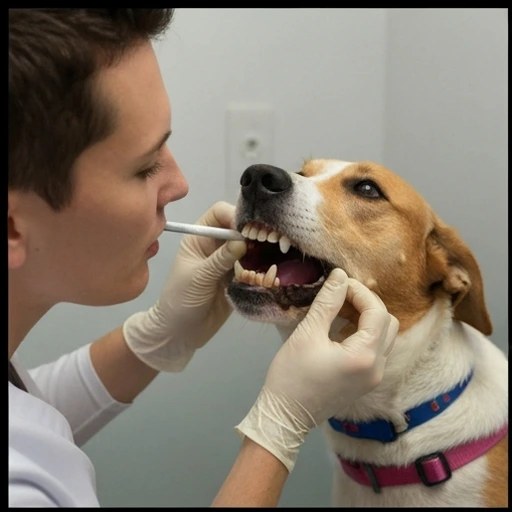
Testing should be done early in a dog's life, ideally before any medications are needed. Puppies from affected breeds should be tested as part of their initial veterinary care. The information becomes part of their permanent medical record and guides all future drug decisions. For a complete walkthrough of sample collection, laboratory options, and interpreting results, see our detailed guide to MDR1 testing.
For breeders, testing is essential for responsible breeding decisions. Knowing the MDR1 status of breeding stock allows informed choices about pairings and ensures puppy buyers receive accurate information about their dogs.
Living with an MDR1-Affected Dog
An MDR1 mutation diagnosis is not a disease diagnosis. Dogs with this genetic status are healthy animals who simply need certain medications avoided. With appropriate precautions, they live full, normal lives.
The key is communication. Every veterinarian who treats your dog should know their MDR1 status. Document it prominently in their medical records. Consider a collar tag or other identification that communicates the information in emergencies.
Safe heartworm prevention options exist for MDR1 dogs. Most commercial heartworm preventatives use doses low enough to be safe even in affected individuals. Your veterinarian can recommend appropriate products. See our guide to safe heartworm prevention for detailed recommendations.
Home safety matters because the most dangerous exposures typically come from accidental ingestion of livestock medications or human drugs like loperamide. Securing these products protects your dog from preventable emergencies. Our home safety guide covers this topic comprehensively.
The Future of MDR1 Research
Research continues to expand our understanding of P-glycoprotein function and its implications for drug therapy. Scientists are investigating whether other genetic variants affect P-glycoprotein function in more subtle ways, potentially explaining individual variation in drug responses even among dogs without the classic mutation.
Pharmacogenomics, the study of how genes affect drug responses, is increasingly important in veterinary medicine. MDR1 was one of the first pharmacogenomic discoveries in dogs, but it will not be the last. As genetic testing becomes more sophisticated and affordable, we may identify additional genetic factors that influence drug safety.
Drug development also benefits from understanding MDR1. Pharmaceutical companies can design new medications that avoid P-glycoprotein interactions entirely, creating safer options for all dogs regardless of genetic status. The isoxazoline class of antiparasitics is a prime example of this progress, offering effective flea and tick protection through mechanisms independent of P-glycoprotein.
A Manageable Genetic Trait
The MDR1 mutation is often discussed in alarming terms because of its association with drug toxicity deaths. This alarm is warranted when owners are unaware of the risk. But once the mutation is identified, it becomes one of the most manageable genetic traits in veterinary medicine.
There is no treatment needed. There is no progressive disease to manage. There is simply a list of medications to avoid or use with caution. That list is well-established and readily available. Following the guidelines is straightforward.
Many genetic conditions in dogs cause ongoing health problems regardless of owner actions. Sites like Shepherd Health Journal cover these broader health concerns in detail. Hip dysplasia causes pain and mobility issues throughout life. Progressive retinal atrophy leads to blindness. Dilated cardiomyopathy causes heart failure. MDR1 sensitivity, by contrast, causes no problems at all unless specific drugs are administered.
This is a genetic trait that informed owners can completely manage. Test your dog. Know their status. Share that information with anyone who provides veterinary care. Secure dangerous substances in your environment. With these simple steps, your MDR1-affected dog faces no greater health risks than any other dog.
The discovery of the MDR1 mutation in 2001 was a breakthrough that saves lives every day. Dogs that would have died from ivermectin toxicity in the 1980s now receive appropriate medications and live full lives. Knowledge is protection. Get your dog tested, and use that knowledge to keep them safe.