
A few months ago, a client brought her newly adopted Australian Shepherd mix to my clinic for a wellness visit. When I asked whether the dog had been tested for MDR1, she paused. She had heard the term from the rescue organization but admitted she had no idea what the test involved, how much it cost, or where to get it done. She assumed it required an expensive blood draw and weeks of waiting.
In reality, MDR1 testing is one of the simplest and most affordable genetic tests available in veterinary medicine. A cheek swab, a mailing envelope, and a few weeks of patience give you information that will protect your dog for the rest of their life. Yet despite how easy the process is, many owners of at-risk breeds never test their dogs, often because they simply do not know how the testing works or that it exists. This guide walks through every step of the process so there are no remaining barriers between you and this critical piece of health information.
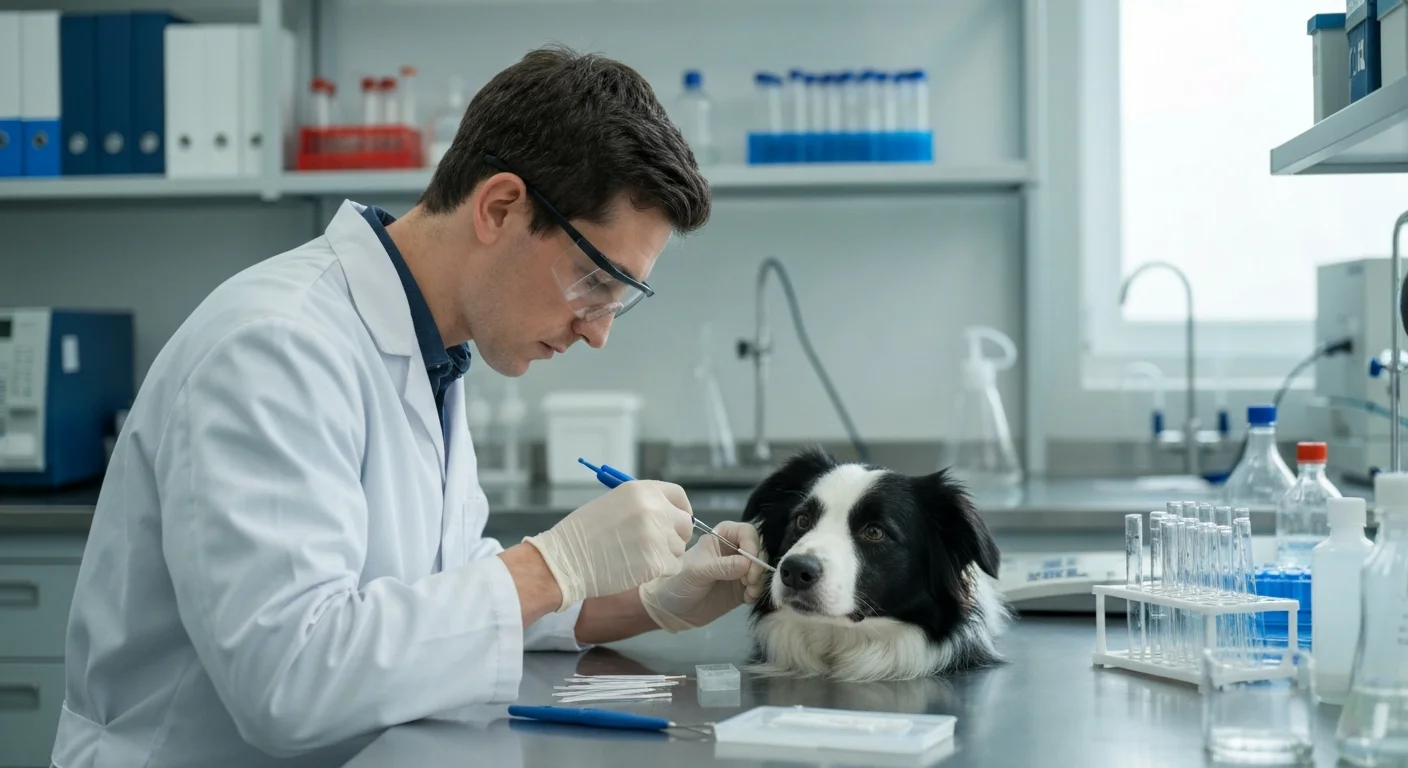
Why Testing Matters More Than Guessing
Some owners assume they can manage their dog's drug sensitivities based on breed alone. If they own a Collie, they avoid ivermectin. If they own a Golden Retriever, they do not worry about it. This approach has two serious flaws.
First, breed-based assumptions are imprecise. Not every Collie carries the MDR1 mutation. Approximately 25 to 30 percent of Collies are genetically normal for MDR1 and face no elevated drug sensitivity risk at all. Treating every Collie as affected means unnecessarily restricting medication options for a significant portion of the breed. Conversely, breeds that owners rarely associate with MDR1, like German Shepherds and mixed breeds with hidden herding ancestry, carry the mutation at rates that make testing essential. Our breed prevalence statistics illustrate just how widely the mutation is distributed across seemingly unrelated breeds.
Second, there is a critical difference between being a carrier (N/M) and being homozygous affected (M/M). Carriers have intermediate risk and may tolerate medications that homozygous dogs cannot. Homozygous dogs need the strictest precautions. Without testing, you cannot distinguish between these genotypes, and that distinction affects real clinical decisions about everything from parasite prevention to chemotherapy dosing if your dog ever faces a cancer diagnosis.
How the Test Works: The Science
MDR1 testing is a straightforward DNA analysis. The test looks for a specific four-base-pair deletion in the ABCB1 gene (formerly called MDR1). This deletion, designated nt230(del4), disrupts the gene's reading frame and prevents production of functional P-glycoprotein.
The laboratory extracts DNA from your dog's sample, then uses polymerase chain reaction (PCR) to amplify the region of the gene where the deletion occurs. By analyzing the size of the amplified DNA fragment, the lab can determine whether your dog has zero, one, or two copies of the deletion.
Two normal-length fragments indicate N/N status, meaning no mutation. One normal and one shortened fragment indicate N/M status, a carrier with one mutant copy. Two shortened fragments indicate M/M status, homozygous affected with no functional P-glycoprotein. The test is binary and definitive. There are no ambiguous results, no borderline readings, and no need for repeat testing under normal circumstances. Once tested, your dog's MDR1 status is known for life.
Sample Collection Methods
MDR1 testing can be performed on two types of samples: cheek swabs and blood draws. Each method has advantages depending on your situation.
Cheek Swab (Buccal Swab)
The cheek swab is the most common collection method for owner-submitted tests. The process is painless, takes about 30 seconds, and can be done at home without any veterinary involvement.
You receive a kit containing one or two cotton-tipped swabs in sterile packaging. Open the packaging without touching the cotton tip. Roll the swab firmly along the inside of your dog's cheek for 15 to 30 seconds, pressing against the cheek tissue to collect cells. Some labs recommend rotating the swab while pressing to maximize cell collection. Place the swab back into its container and let it air dry if the instructions specify.
The key to a good cheek swab sample is adequate cell collection. Dogs who have just eaten or drunk water may have fewer cells available on their cheek surfaces. Most laboratories recommend waiting at least 30 minutes after eating or drinking before collecting the sample. If your dog is a puppy still nursing, wait until they have been separated from their mother for at least an hour.
Blood Sample
A blood draw provides a higher-quality DNA sample and is often done when your dog is already at the veterinarian for other bloodwork. Your vet draws a small amount of blood, typically 1 to 3 mL into an EDTA tube, the standard purple-top tube used for complete blood counts.
Blood samples are sometimes preferred for very young puppies, for dogs whose cheek swab results were inconclusive due to insufficient DNA, or when the veterinarian wants to combine MDR1 testing with other laboratory work in a single visit.
Sample Collection Tips
Cheek swab: Wait 30 minutes after eating or drinking. Roll firmly for 15-30 seconds. Do not touch the cotton tip with your fingers.
Blood draw: Standard EDTA tube, 1-3 mL. Can be combined with routine bloodwork. Ship according to lab instructions (usually room temperature).
Both methods: Follow the specific laboratory's shipping instructions carefully. Most samples are stable at room temperature for several days.
Where to Get Tested
Several laboratories offer MDR1 testing, ranging from the academic institution that discovered the mutation to commercial pet genetics companies. Here are the primary options.
Washington State University Veterinary Clinical Pharmacology Laboratory
WSU developed the MDR1 test and maintains the largest database of results worldwide. Their test is considered the gold standard. They accept cheek swab and blood samples submitted by owners or veterinarians. Results typically take 5 to 10 business days. The standalone MDR1 test costs approximately 70 dollars. WSU also offers additional pharmacogenomic tests that can be bundled for a modest additional cost.
Commercial Genetic Testing Companies
Several commercial pet genetics companies include MDR1 status in their comprehensive breed and health panels. These panels test for dozens or hundreds of genetic conditions simultaneously and typically cost 100 to 200 dollars. Results take 2 to 4 weeks. Companies offering MDR1 testing include Embark, Wisdom Panel, and others. These panels provide additional health and breed information beyond MDR1, which some owners find valuable.
If you are purchasing a comprehensive genetic panel primarily for MDR1 results, be aware that some panels take significantly longer to return results than a standalone MDR1 test. If your dog needs medication decisions soon, the WSU standalone test or asking your veterinarian about expedited options may be faster.
Veterinary Reference Laboratories
Some large veterinary reference laboratories like IDEXX and Antech offer MDR1 testing as part of their genetic testing menus. Your veterinarian can submit a blood sample during a routine visit. Results typically take 1 to 2 weeks. Costs vary by laboratory and veterinary practice markup.
| Testing Option | Approximate Cost | Turnaround Time | Sample Type |
|---|---|---|---|
| WSU Standalone MDR1 | $70 | 5-10 business days | Cheek swab or blood |
| Embark Breed + Health | $150-200 | 2-4 weeks | Cheek swab |
| Wisdom Panel Premium | $130-160 | 2-3 weeks | Cheek swab |
| Veterinary Reference Lab | $60-100 + vet fees | 1-2 weeks | Blood draw |
Interpreting Your Dog's Results
The results will report one of three genotypes. Understanding what each means in practical terms is essential for making informed medication decisions.
Normal/Normal (N/N)
Your dog has two functional copies of the MDR1 gene and produces normal amounts of P-glycoprotein. They do not carry the mutation and cannot pass it to offspring. From an MDR1 perspective, there are no special medication restrictions. Standard drug protocols apply.
This result is welcome news, but remember that extremely high doses of P-glycoprotein substrate drugs can overwhelm even normal pump function. Accidental ingestion of livestock-strength ivermectin products can still cause toxicity in N/N dogs. The difference is that the toxic threshold is much higher.
Normal/Mutant (N/M) - Carrier
Your dog has one functional and one mutant copy of the gene. They produce reduced but measurable P-glycoprotein. This carrier status means intermediate drug sensitivity, not as vulnerable as M/M dogs, but more sensitive than N/N dogs.
In practice, N/M dogs typically tolerate macrocyclic lactones at heartworm prevention doses without difficulty. The risk increases with higher doses. For medications like loperamide, which should be avoided in all MDR1-affected dogs regardless of zygosity, the restriction applies equally to N/M and M/M dogs. For a detailed breakdown of which medications require precautions at each genotype level, see our complete drug list for MDR1 dogs.
N/M dogs will pass the mutant allele to approximately half of their offspring. This is important information for breeders. Pairing an N/M dog with another N/M dog will produce approximately 25 percent M/M puppies, the highest-risk genotype.
Mutant/Mutant (M/M) - Affected
Your dog has two mutant copies and produces no functional P-glycoprotein. This is the highest-risk genotype. The blood-brain barrier lacks the molecular pump that normally excludes certain drugs, meaning drugs like ivermectin can accumulate freely in the brain at doses that would be handled safely by dogs with functional pumps.
M/M dogs require the strictest medication precautions. High-dose macrocyclic lactones, loperamide, and certain chemotherapy agents must be avoided or used only with significant dose modifications under close veterinary supervision. Every veterinarian who treats your dog must know this status. Document it everywhere: medical records, collar tags, microchip registration, and emergency contact cards.
All offspring of an M/M dog will inherit at least one mutant copy, meaning they will be either N/M carriers (if the other parent is N/N) or M/M affected (if the other parent is N/M or M/M).
What to Do After Receiving Results
N/N: File results with veterinary records. No special medication restrictions needed from MDR1 perspective.
N/M: Notify all veterinarians. Avoid loperamide. Use heartworm preventatives at label doses only. Discuss dose adjustments for sedation and anesthesia drugs. Consider implications for breeding.
M/M: Urgent notification to all veterinary providers. Obtain medical alert collar tag. Register status with microchip company. Review all current medications with veterinarian. Secure all macrocyclic lactone products in home. Review home safety protocols.
When to Test
The ideal time to test is before your dog ever needs a medication that could be affected by MDR1 status. For puppies from at-risk breeds, I recommend testing as part of their initial veterinary care, ideally before the first heartworm preventative dose.
Puppies can be tested as young as a few weeks old, though cheek swab samples from very young puppies who are still nursing may have lower DNA yields. If testing a nursing puppy, a blood sample may provide more reliable results, or you can wait until the puppy is weaned and retest with a cheek swab.
For adult dogs who have never been tested, the best time is now. Do not wait until an emergency to discover your dog's genetic status. I have treated too many dogs whose MDR1 status was unknown until they were already in crisis from a drug reaction. That information, discovered in the emergency room, comes too late to prevent the emergency.
If you have adopted an adult dog with unknown history, test before starting any new medications. Many rescue organizations now include MDR1 testing in their pre-adoption health screening for herding breeds, but not all do. Verify whether testing was done and request documentation.
Common Questions and Misconceptions
Can the Test Be Wrong?
False results are extremely rare with PCR-based MDR1 testing. The most common cause of an incorrect result is insufficient DNA in the sample, which typically causes the lab to report an inconclusive result rather than a false one. If the lab reports inconclusive results, resubmit with a fresh sample, preferably a blood draw for maximum DNA yield.
Cross-contamination between samples in multi-dog households is theoretically possible with cheek swabs. If your dogs share water bowls and groom each other, collect samples after keeping them separated for at least an hour. Some owners swab each dog in a different room to eliminate any doubt.
Does MDR1 Status Change Over Time?
No. MDR1 status is determined by your dog's DNA, which does not change throughout their life. A test performed on a puppy is valid for that dog forever. There is no need to retest unless you suspect the original sample was compromised or the result was inconclusive.
Should I Test Mixed Breed Dogs?
Absolutely, especially if they have any herding breed ancestry or if their background is unknown. DNA breed panels have revealed herding breed heritage in many dogs that show no obvious physical traits of those breeds. A dog that looks like a Labrador mix could carry Australian Shepherd or Collie genetics several generations back and still have inherited the MDR1 mutation. For broader context on the mutation and its evolutionary origins, the MDR1 overview at MDR1 Gene Guide explains how the mutation spread across so many breeds.
Is Testing Required by Law?
No jurisdiction currently requires MDR1 testing. However, many breed clubs strongly recommend or require testing for breeding stock. Some veterinarians require confirmed MDR1 status before prescribing certain high-risk medications to at-risk breeds, which is a practice I endorse.

Sharing Results with Your Veterinary Team
Having test results is only useful if the information reaches the people making medication decisions for your dog. I recommend a multi-layered communication strategy.
Provide a copy of the laboratory report to your primary veterinarian and request it be scanned into your dog's permanent medical record. Ask that MDR1 status be flagged prominently, ideally appearing in the alerts or warnings section that staff see every time they open the chart.
If your dog ever visits an emergency clinic, boarding facility, or any other veterinary provider, bring the results and insist they be documented. Emergency veterinarians making rapid drug decisions need this information immediately, not buried in records they may not have time to review. Consider an engraved collar tag stating your dog's MDR1 genotype, something like "MDR1 M/M - No Ivermectin / No Loperamide" that any veterinarian would understand at a glance.
Keep digital copies on your phone and backed up to cloud storage. In an emergency at 2 AM, fumbling through paper files is not practical. A photo of the lab report accessible from your phone can communicate everything a treating veterinarian needs to know.
Testing as Part of Responsible Ownership
The MDR1 test costs less than a bag of premium dog food. It takes less effort than a routine nail trim. Yet it provides information that can literally save your dog's life. I have treated dogs who survived ivermectin toxicity only because their MDR1 status was already documented, allowing the emergency team to make immediate, informed treatment decisions. I have also treated dogs who might have survived if their status had been known earlier.
For breeders, testing is not just recommended but is an ethical obligation. Every puppy buyer deserves to know whether their new dog carries a genetic vulnerability that affects medication safety. Including MDR1 test results in puppy packets, alongside other health certifications, sets new owners up for success from day one. If you are considering an appropriate heartworm prevention plan for a new puppy, knowing MDR1 status before the first dose ensures the safest possible choice.
The science is clear. The test is accessible. The information is permanent and actionable. There is no good reason to leave your dog's MDR1 status unknown. Test early, share the results widely, and use them to make every medication decision a safe one.