
The family had been using the same boarding kennel for years. Their Shetland Sheepdog was well-known to the staff, well-liked, and had always come home in good health. Then the kennel changed their intake parasite management protocol. New management, new standard procedure: all dogs received a topical selamectin product on arrival to prevent kennel-spread ectoparasites. It was applied to the back of the neck in the same way that many spot-on flea preventatives are applied.
The kennel did not ask about drug sensitivities. The intake form did not have a field for it. The staff who applied the product had no reason to believe it would be a problem — selamectin is a registered veterinary product, not an agricultural chemical. What the staff did not know, and had no mechanism to know, was that this Sheltie was homozygous for the MDR1 mutation and that selamectin, a macrocyclic lactone, at the labeled topical dose, could cause significant toxicity in this particular dog.
The owners retrieved their dog two days later with unexplained neurological signs. The kennel was not able to identify what had caused the problem. It took a full history review with a toxicologist to connect the dots.
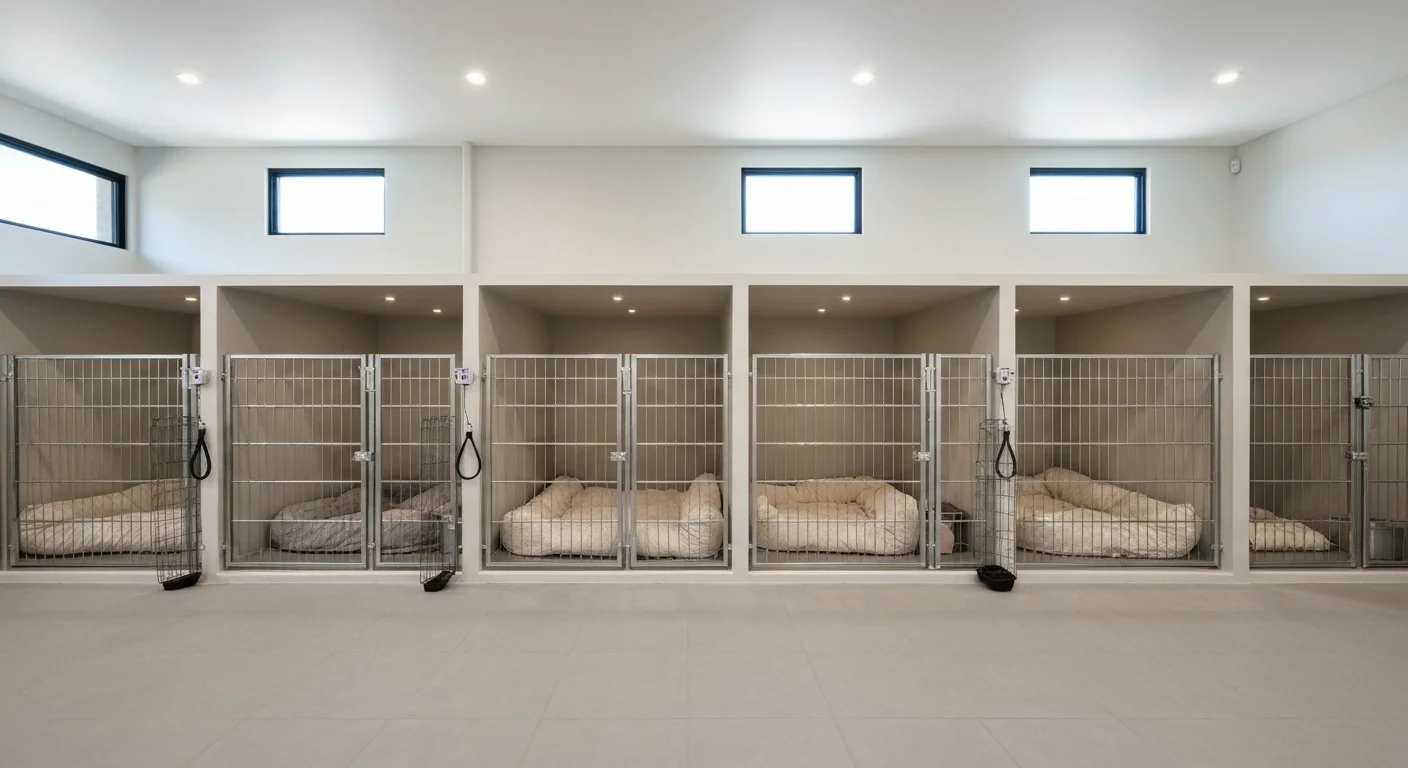
Understanding the Facility Risk Landscape
Boarding facilities and grooming salons represent a category of MDR1 risk that receives very little attention in owner education about this mutation. Most MDR1 awareness education focuses on veterinary prescriptions — the ivermectin mange treatment, the compounded antiparasitic, the accidental livestock product exposure. Facility-based exposures are a distinct and underappreciated hazard category.
Multiple exposure routes exist in boarding and grooming environments. Direct treatment is the most obvious: some facilities apply antiparasitic products as part of their standard protocol, sometimes without explicit owner knowledge or consent. Indirect exposure through shared surfaces is subtler but real — a topical spot-on applied to another dog in the kennel can transfer to shared bedding, toys, or surfaces that other dogs contact. Grooming product transfer is possible when facilities use shared grooming tools or products between animals.
The risk varies enormously by facility. High-quality boarding operations that require proof of current parasite prevention before intake are lower risk — they have confirmation that the dog's owner has managed parasite control with whatever products were chosen. Facilities that apply their own products regardless of the dog's preventive status represent higher risk for MDR1-affected animals.
Questions to Ask Boarding Facilities Before Drop-Off
Before boarding an MDR1-affected dog at any facility, a direct conversation about their parasite management protocols is essential. The questions that matter most are specific and concrete. Do you apply any antiparasitic products to incoming dogs? If so, what products do you use? Do you have a process for documenting and accommodating drug sensitivities? What happens if a dog in my dog's area is treated with a topical antiparasitic while my dog is present?
A facility that cannot answer these questions clearly, or that applies macrocyclic lactone products routinely without owner notification, is not a safe environment for an MDR1-affected dog. This is not a criticism of the facility's overall quality — it may be an excellent kennel in all other respects. But if the parasite management protocol is not compatible with your dog's medical needs, that is a dealbreaker regardless of how otherwise impressive the facility is.
Document the conversation and the responses you receive. If a facility tells you verbally that they will not treat your dog with any antiparasitic, get this confirmed in writing in the intake paperwork. A verbal assurance that is not documented is difficult to rely on if staff change between your booking and your dog's stay.
Communicating MDR1 Status to Facility Staff
Facility staff are not veterinarians. The conversation about MDR1 needs to be clear and actionable without requiring pharmacological background to understand. Avoid technical language that staff may not recognize. Instead of "my dog is homozygous for the MDR1 ABCB1 gene mutation," say "my dog has a serious drug sensitivity that means certain common pet products — including many flea and tick treatments — can cause neurological problems or be fatal."
Provide written documentation. A single page that says "THIS DOG HAS DRUG SENSITIVITY — DO NOT APPLY ANY ANTIPARASITIC, FLEA, OR TICK PRODUCT" in large, clear text, along with the owner's emergency contact number and the primary veterinarian's phone number, is the most practical tool for communicating MDR1 risk in a facility context. Place a copy in the intake folder and request that it be attached to the kennel card that stays with the dog.
The broader communication principles that apply in emergency veterinary settings — leading with the drug sensitivity information, ensuring it is documented, not burying it in general health history — apply equally in boarding and grooming contexts. For detailed guidance on these protocols, the emergency clinic communication guide covers approaches that translate well to any non-veterinary setting.
What to Include on Your MDR1 Facility Card
Dog's name and photo. In large text: "DRUG SENSITIVITY — DO NOT APPLY ANY ANTIPARASITIC OR FLEA/TICK PRODUCT." Brief explanation: "This dog has the MDR1 gene mutation. Products containing ivermectin, selamectin, milbemycin, or moxidectin can cause serious neurological harm or death." Emergency contacts: owner cell, primary veterinarian with 24-hour number. MDR1 test result copy (optional but reinforces the alert). Laminate and attach to leash, collar, and include in kennel intake folder.
Grooming Salons and Topical Product Risk
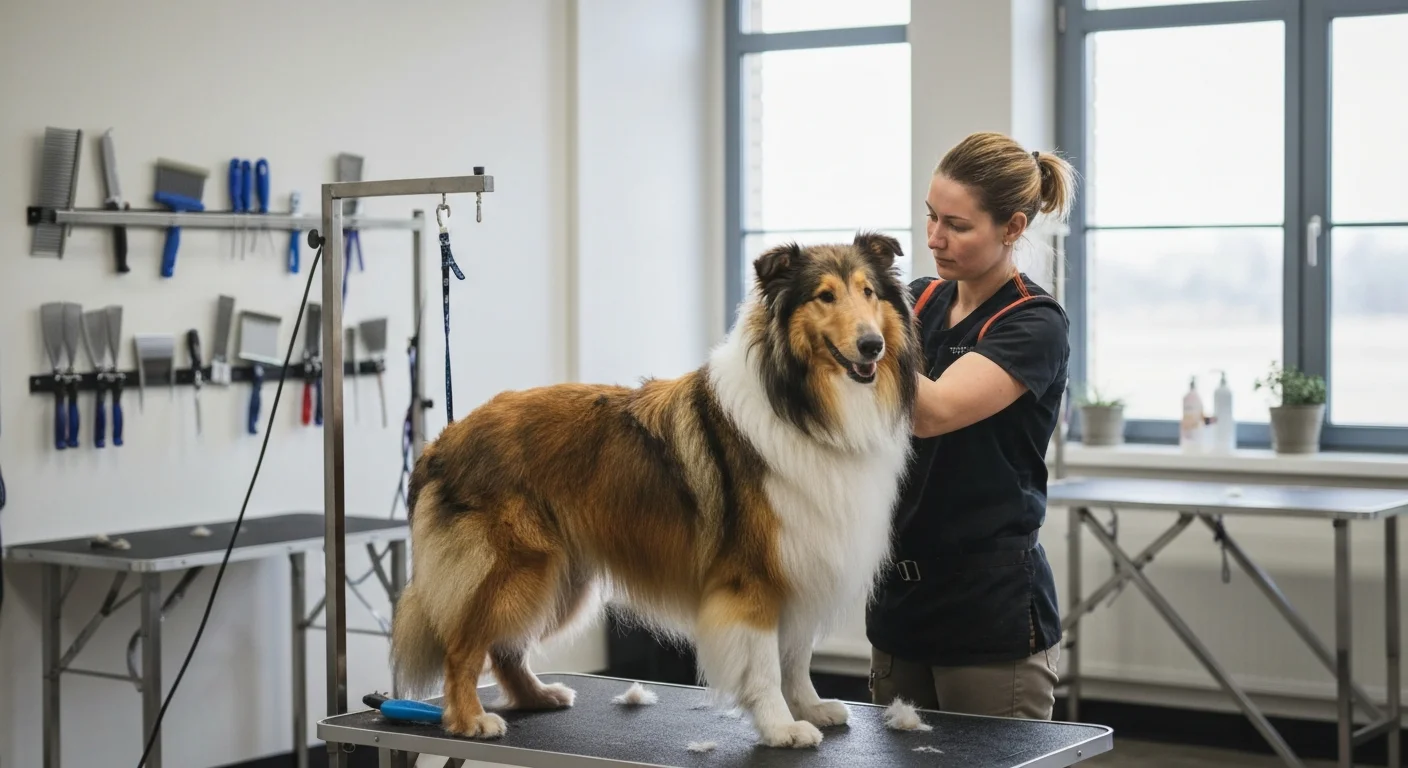
Grooming salons present a different exposure profile than boarding facilities. The primary risks are topical: products applied to the dog's skin during bathing, dipping, or treatments for skin conditions. Some grooming facilities use antiparasitic shampoos, dips, or topical sprays as standard services or add-ons that customers may not realize are being applied.
Pyrethrin and pyrethroid-containing products are commonly used in grooming contexts and are a distinct risk category from macrocyclic lactones — they do not interact with P-glycoprotein in the same way but can be toxic to dogs through different mechanisms at high exposures. The MDR1-specific risk in grooming contexts primarily concerns selamectin spot-ons applied as part of a parasite service offering, milbemycin-containing skin treatments, and shared grooming surfaces where residual topical products may transfer.
Groomers should be explicitly instructed: no flea treatment, no tick prevention application, no antiparasitic shampoo or dip, and no add-on parasite services for this dog without owner pre-approval of the specific product and confirmation with the veterinarian. This instruction should be placed in the grooming record and reconfirmed at every appointment.
The Indoor Exposure Problem
Boarding facilities that treat incoming dogs with topical spot-on products create an indirect exposure risk for other dogs in the kennel even when those specific dogs are not directly treated. Selamectin spot-ons, for example, can transfer to shared bedding. Dogs that sleep on bedding used by a selamectin-treated dog, or that contact other shared surfaces during kennel time, may absorb measurable quantities of the product through skin contact.
The actual dose absorbed through incidental contact with treated surfaces is likely to be low in most cases. For a dog with fully functional P-glycoprotein, this represents essentially no clinical risk. For an MDR1-affected dog with no functional pump, even low-dose exposure can be more impactful than for an unaffected dog — not necessarily to the point of clinical toxicity at typical contact doses, but the exposure should not be assumed harmless.
The safest approach for MDR1-affected dogs with a homozygous affected (M/M) genotype is to board only at facilities that do not apply any macrocyclic lactone products to any dogs during the facility visit period. This may require asking specifically about the facility's kennel-wide treatment protocols, not just whether your specific dog will be treated.
Home-Based Alternatives
For owners who cannot find a boarding facility with MDR1-compatible protocols, in-home pet sitting is a safe alternative that eliminates facility-based exposure risk entirely. In-home sitters come to the dog rather than the dog going to a shared environment. The primary risk reduction is in parasite product exposure — the home environment does not have macrocyclic lactone products on surfaces, shared bedding, or in staff treatment protocols.
If an in-home sitter is used, the MDR1 documentation still matters for any medication decisions the sitter might make, even over-the-counter flea treatments purchased at a pet store. The sitter should have the same written alert, emergency contacts, and clear prohibition on applying any antiparasitic product without owner and veterinary confirmation.
For dogs managed at home during owner travel, a trusted person who is educated about MDR1 and the dog's specific needs is the highest-safety option. This person needs to know not just what medications to avoid but also what environmental hazards exist — a house near a farm, access to a yard where livestock treatments might be found, or other dogs in the household receiving topical antiparasitics that could transfer. The home safety guide covers these environmental hazards in detail and is useful reading for anyone responsible for an MDR1-affected dog in the owner's absence.
Training Facility and Dog Sport Venue Considerations
Owners of herding breeds who participate in dog sports — agility, herding trials, obedience competitions — encounter shared environments at training facilities and trial venues. These settings are lower risk than boarding facilities because direct antiparasitic application is not standard, but contact with dogs who are wearing flea collars containing macrocyclic lactones, or dogs who have recently had topical spot-on applications, represents a theoretical transfer risk.
Practically, this risk is low for most MDR1-affected dogs at typical sport venues. The dose transferred through casual contact with another dog's treated skin is minimal. For dogs who are homozygous mutant and who also compete or train with intense physical contact with other dogs, discussing this risk with your veterinarian is reasonable, but it should not prevent participation in dog sports for the vast majority of MDR1-affected dogs with otherwise managed sensitivity.
Advocating for Systemic Change
The boarding and grooming industry does not currently have standardized protocols for accommodating dogs with MDR1 drug sensitivity. Intake forms at most facilities do not ask about drug sensitivities. Staff training on MDR1 is essentially non-existent outside of specialty facilities that serve herding breed communities.
Owners who consistently raise MDR1 at facility intake contribute to the gradual education of the industry. Facilities that encounter this issue repeatedly begin to develop protocols. Staff who learn about MDR1 from one client's documentation remember it when the next client arrives with a Collie. The aggregate effect of individual owner advocacy — clear communication, written documentation, consistent follow-through — is a slow but real shift in facility awareness.
Breed clubs and herding breed rescue organizations can accelerate this shift by providing facilities in their communities with educational materials about MDR1, by recommending MDR1-aware facilities to their members, and by advocating for standardized intake procedures that include drug sensitivity screening. Understanding your dog's complete MDR1 status, as explained in the MDR1 testing guide, gives you the specific information you need to be an effective advocate in all of these settings.