
Dental procedures are among the most common general anesthesia events in companion dog medicine. For a Collie, Australian Shepherd, Shetland Sheepdog or any other MDR1-affected dog, a routine cleaning or extraction can involve six or seven drugs in succession — premedication, induction, maintenance inhalant, local nerve block agent, intraoperative analgesic, post-op pain medication, sometimes antibiotics. Several of those drugs have MDR1-relevant considerations, and the cumulative profile of the anesthetic event deserves more planning than a standard dental in a non-sensitive dog would receive.
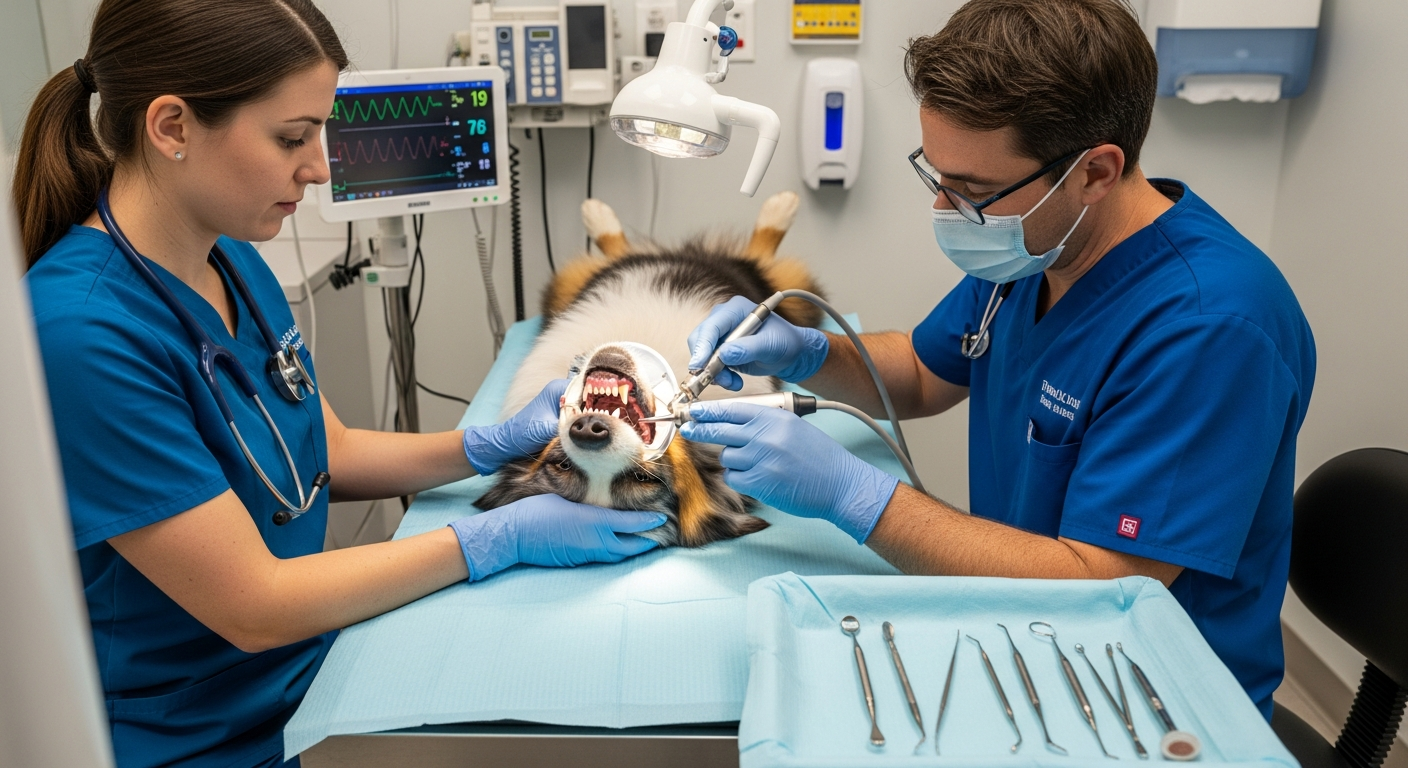
I see MDR1 complications in routine dental events more often than in the high-profile exposures that make the headlines. The mechanism is quiet: a cumulative sedative effect from drugs whose individual doses were reasonable, producing a dog that is slower to recover and harder to monitor than the team expected. Understanding the affected drug classes and their MDR1 relevance keeps these cases uneventful.
The Drug Classes That Matter
Not every anesthetic drug is relevant to MDR1 status, but several commonly used agents are. The following table summarizes where planning adjustments are warranted:
| Drug class | Common examples | MDR1 relevance | Planning adjustment |
|---|---|---|---|
| Opioid premed | Butorphanol, hydromorphone, methadone | Variable; butorphanol well-tolerated | Prefer butorphanol for premed; dose-adjust stronger opioids |
| Sedative premed | Acepromazine | Substantial; MDR1 dogs show enhanced sedation | Reduce dose 25-50% or avoid entirely |
| Alpha-2 agonist | Dexmedetomidine | Case-by-case; use cautiously | Reduced dose with reversal agent available |
| Induction agent | Propofol, alfaxalone | Standard dosing generally safe | Titrate to effect as usual |
| Maintenance inhalant | Isoflurane, sevoflurane | No direct MDR1 concern | Standard use |
| Local anesthetic | Lidocaine, bupivacaine | No MDR1 concern | Standard use; excellent for dental blocks |
| NSAID post-op | Meloxicam, carprofen, robenacoxib | No direct MDR1 concern | Standard considerations |
| Opioid post-op | Tramadol, oral buprenorphine | Variable | Avoid tramadol in MDR1+; prefer buprenorphine |
The two categories that most often cause trouble in dental anesthesia are the phenothiazine premeds (acepromazine) and the post-op opioids. Both are routinely used without MDR1-specific adjustment in many general practices, producing dogs that are deeply sedated well beyond the expected recovery window.
Acepromazine: The Most Common Pitfall
Acepromazine is a P-glycoprotein substrate. In MDR1 mutant/mutant dogs, efflux of the drug from the central nervous system is substantially reduced, and the central sedative effect is correspondingly prolonged. A standard premed dose that would produce 2-3 hours of light sedation in a normal dog can produce 6-8 hours of deep sedation in an MDR1 homozygote.
The practical rule I teach: in confirmed MDR1 mutant/mutant dogs, either reduce acepromazine dose by at least 50% or substitute a non-phenothiazine premed. In mutant/normal heterozygotes, modest dose reduction (25%) is prudent. The published guidance from the Washington State University veterinary pharmacology laboratory is the best starting reference, and their updated drug list should be checked before every anesthetic protocol in an affected dog.
The Opioid Question
Opioid handling in MDR1 dogs is more nuanced than a simple avoid/don't-avoid rule. Butorphanol is well-tolerated at standard doses and is my default premed opioid for confirmed MDR1 dental patients. Hydromorphone and methadone can be used with dose reduction and careful recovery monitoring. Tramadol is best avoided — not only for MDR1 reasons but because its analgesic efficacy in dogs is increasingly questioned by the broader analgesic literature.
Post-operative buprenorphine, delivered either parenterally or via oral transmucosal route, is a workhorse. Standard doses are generally fine in MDR1 dogs. For owners managing a multi-day recovery, buprenorphine plus an appropriate NSAID usually provides sufficient multimodal analgesia without the sedation risks of stronger opioids.
Monitoring Considerations
Because the predictable risk in MDR1 dental anesthesia is prolonged CNS effect rather than acute cardiovascular compromise, the monitoring I emphasize is extended recovery observation rather than unusual intraoperative vigilance. Specifically:
- Minimum 2-hour observed recovery after extubation, extending as needed until the dog is ambulating comfortably
- Temperature monitoring — MDR1 dogs with prolonged sedation are at higher risk for post-anesthetic hypothermia
- Careful assessment of swallowing before offering water — residual sedation may delay return of protective reflexes
- Clear discharge instructions to owners including signs of excessive sedation that warrant returning to the clinic
I also communicate MDR1 status prominently in the patient record and have the technicians verify it verbally before drug draws. Many MDR1 complications in practice come from a single missed check on a dog whose status was in the file but not front-of-mind during a busy day. Routine workflows built around recognized MDR1 error patterns catch these before drugs are administered.
The Pre-Procedure Conversation
For the first dental in a confirmed MDR1 dog, I have an extended pre-procedure conversation with the owner covering four topics:
- The specific drug protocol planned, with rationale for why each drug is chosen
- Expected recovery timeline and what "normal" looks like
- Signs of delayed or prolonged sedation warranting re-evaluation
- Post-op pain management plan and which oral medications to expect at home
Owners appreciate this conversation. It converts a routine procedure into a collaborative one, reduces anxiety about their dog's sensitivity, and builds the trust needed for future preventive and therapeutic care decisions.
The Underlying Principle
MDR1 dental anesthesia is not dangerous when approached with planning. It becomes dangerous when practitioners treat the procedure as routine without attending to the drug-by-drug considerations the mutation requires. The mutation has been known and characterized for over two decades — every general practice that handles collies, shepherds, and related breeds should have a written MDR1 anesthesia protocol in place. If your dental provider cannot produce one on request, it is a legitimate question to ask before proceeding with the procedure. The molecular basis for these considerations is covered in detail in the article on the MDR1 gene mutation itself.
Owners often ask whether a dog scheduled for a dental cleaning should be tested before anesthesia. Screening identifies the MDR1 mutation but does not cover every drug reaction, so the result guides premedication and parasite prevention rather than replacing clinical judgment. Keeping the result in the medical record helps every veterinarian who handles the case. For a fuller discussion of when testing changes decisions around dental work and sedation, including breeding and purchase considerations, that article sets out the practical summary.