
The phone call came at 2:47 AM on a Tuesday. A frantic woman explained that her Australian Shepherd had gotten into the horse barn and eaten what she thought was a tube of Ivomec paste. The dog was already trembling. By the time they arrived at my emergency room forty minutes later, the trembling had progressed to full-body muscle fasciculations. His pupils were dilated to the point where almost no iris was visible. He was drooling profusely and could not stand.
I knew before running any tests that we were dealing with ivermectin toxicity in an MDR1-affected dog. I also knew that the next 72 hours would determine whether this dog lived or died. Understanding exactly what was happening at the molecular level inside his brain helps explain why these cases are so dangerous and why the window for intervention is so narrow.
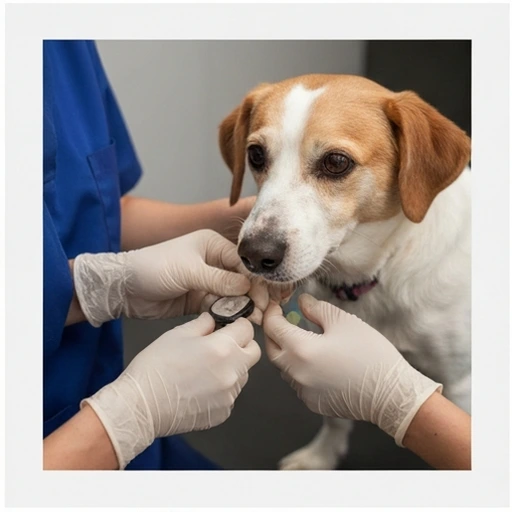
The P-Glycoprotein Pump: Your Dog's Chemical Bouncer
In a healthy dog, a protein called P-glycoprotein acts as a molecular bouncer at the blood-brain barrier. This barrier is not just a passive wall. It is an active system that carefully controls what enters the brain. P-glycoprotein sits embedded in the cells that line blood vessels in the brain, constantly pumping out substances that should not be there.
Ivermectin is one of those substances. In normal circumstances, any ivermectin that tries to enter the brain gets immediately ejected by P-glycoprotein. The pump recognizes the drug, grabs it, and throws it back into the bloodstream. This happens continuously and efficiently. That is why ivermectin can safely kill parasites in the body while leaving the brain untouched in dogs with normal P-glycoprotein function.
The MDR1 gene provides the instructions for making P-glycoprotein. When that gene is mutated, the resulting protein is truncated, misfolded, or entirely absent. The bouncer is either incompetent or missing from the door entirely.
What Happens When the Gate Opens
Without functional P-glycoprotein, ivermectin crosses the blood-brain barrier freely. Once inside the central nervous system, it binds to GABA receptors and glutamate-gated chloride channels. Both of these are critical for normal nerve function.
GABA receptors, when activated, inhibit nerve transmission. Under normal circumstances, this creates balance in the nervous system. When ivermectin floods these receptors, it causes excessive inhibition. The affected neurons essentially stop communicating. In parasites, this paralysis is lethal. In a mammalian brain, it causes progressive neurological collapse.
The glutamate-gated chloride channels are even more problematic. These channels are found throughout the brain and spinal cord. Ivermectin forces them open and keeps them open. Chloride ions flood into neurons, hyperpolarizing the cells and making them unable to fire. The brain begins shutting down region by region.
Clinical Correlation
The progression of symptoms reflects which brain regions are affected first. Initial ataxia indicates cerebellar involvement. Mydriasis (dilated pupils) shows brainstem effects. As toxicity progresses to the cortex, consciousness is impaired. Complete unresponsiveness indicates widespread cortical shutdown.
The Dose-Response Nightmare
Here is what makes this particularly insidious. Ivermectin doses used for heartworm prevention are generally safe even for MDR1-affected dogs. We are talking about 6 micrograms per kilogram given monthly. At this dose, even dogs with no P-glycoprotein function typically tolerate the drug because the total amount entering the brain remains below toxic thresholds.
The problem arises with higher doses. Treatments for demodectic mange use ivermectin at 300 to 600 micrograms per kilogram daily. That is 50 to 100 times the heartworm prevention dose. Cattle and horse formulations of ivermectin, like the Ivomec paste that Australian Shepherd ate, are concentrated for large animals. A single tube contains enough ivermectin to treat a 1,250-pound horse. When a 50-pound dog eats that tube, they have just ingested a dose hundreds of times higher than any therapeutic canine application.
For MDR1-affected dogs, there is no safe buffer. The drug accumulates in the brain continuously. I have seen toxicity from doses as low as 100 micrograms per kilogram in homozygous mutant dogs. The manufacturer's cattle drench products deliver doses that can exceed 2,000 micrograms per kilogram when ingested by a curious dog. At those levels, even dogs with normal P-glycoprotein can show toxicity. For MDR1 dogs, such exposures are frequently fatal.
The Accumulation Problem
Ivermectin has a long half-life in dogs, approximately two days. In the brain of an MDR1-affected dog, the half-life is even longer because there is no pump removing it. The drug accumulates with each passing hour. This is why dogs often present with mild symptoms that progressively worsen over 24 to 48 hours after exposure.
I treated a Collie last year who had received a single dose of ivermectin for a suspected mite infection. The dose was within what some references list as safe, around 200 micrograms per kilogram. The owners noticed mild wobbliness that evening but assumed the dog was tired. By the next morning, the dog could not stand. By that evening, she was completely unresponsive. Recognizing these progressive clinical signs of ivermectin toxicity can help owners seek treatment before symptoms become severe.
That delay is deceptive. It gives owners false hope that their dog tolerated the exposure. Meanwhile, drug concentrations in the brain continue climbing. By the time severe symptoms appear, we are already behind in our treatment efforts.
Why Some Dogs Die and Others Survive
The outcome depends on several factors. The dose matters enormously. Dogs who ingest massive amounts, like eating a livestock product, face worse odds than those who received a moderately elevated therapeutic dose. The genetic status matters. Homozygous mutant dogs (M/M) with no functional P-glycoprotein are at highest risk. Heterozygous dogs (N/M) have some pump function and may tolerate moderate exposures better.
Time to treatment is critical. Dogs who receive aggressive supportive care within the first few hours have significantly better survival rates. This is partly because we can reduce absorption if the dog presents early, and partly because supportive care can sustain the dog through the worst of the CNS depression.
Finally, individual variation plays a role. Some dogs seem to tolerate brain ivermectin levels that would kill others. We do not fully understand why. It may relate to receptor density, other genetic polymorphisms, or compensatory mechanisms we have not yet identified.
The Manufacturer Problem
I have to address something that infuriates me professionally. Ivermectin manufacturers have known about MDR1 sensitivity for over two decades. The mutation was characterized in the 1990s. Commercial DNA tests have been available since 2004. Yet walk into any farm supply store and you will find Ivomec paste marketed with pictures of dogs on the packaging.
The label warnings are inadequate. They mention sensitivity in Collies and collie-type dogs, but the MDR1 mutation exists in dozens of breeds including Australian Shepherds, Shetland Sheepdogs, German Shepherds, and numerous mixed-breed dogs. The fine print mentions consulting a veterinarian, but that does not help when someone's dog gets into the barn at 2 AM.
These products should require veterinary prescription for any use. They should have prominent warnings with actual mortality data. Instead, they are sold next to dog treats, and owners learn about the danger only after their dog is seizing in an emergency room. For more on the genetics behind this sensitivity, the MDR1 genetics guide at The Herding Gene provides excellent scientific background on the mutation.
Protecting Your Dog
The solution is straightforward but requires action before exposure occurs. Test your dog. If your dog has any herding breed ancestry, or if you simply do not know their complete genetic background, get an MDR1 test. The test costs between $40 and $75 depending on the laboratory. That is less than the first hour of emergency care would cost.
Once you know your dog's status, communicate it to every veterinarian who treats your dog, including oncologists if your dog ever faces a cancer diagnosis, since chemotherapy drugs like vincristine and doxorubicin are also affected by MDR1 status. Put it on their collar tag. List it in their medical records. Make sure emergency clinics can access this information at 3 AM when you may not be thinking clearly. Our home safety guide provides comprehensive strategies for protecting your dog from accidental exposure.
If your dog is affected, secure all macrocyclic lactone products. This includes not just ivermectin but also moxidectin, milbemycin, and selamectin in their concentrated forms. Livestock dewormers should be locked away. Horse barns should be inaccessible. The consequences of a moment's carelessness can be fatal.
Final Thoughts
That Australian Shepherd I mentioned at the beginning survived. He spent four days in my ICU, most of it unconscious on IV fluids and lipid emulsion therapy. When he finally woke up, he was blind for another 48 hours before his vision returned. His owners now keep their horse medications in a locked cabinet. They also have his MDR1 status tattooed inside his ear, which I recommend for any affected dog. For details on the intensive care procedures that saved him, see our treatment protocol guide.
Not every dog is that lucky. Understanding the mechanism behind ivermectin toxicity helps explain why prevention is so much more effective than treatment. Once the drug is in the brain, we are fighting biology with limited tools. The P-glycoprotein pump evolved over millions of years to protect the central nervous system. When that protection is compromised, the consequences can be devastating.
Know your dog's MDR1 status. It is the single most important piece of information for keeping them safe from drug-induced harm.