
The case came from a breeder who was meticulous about her Australian Shepherd's medications. She knew the dog was MDR1-affected — homozygous mutant — and had successfully managed her medication protocol for seven years without incident. The dog was being treated for a respiratory infection with a standard antibiotic that had no significant MDR1 interaction. The owner had checked. She was certain it was safe.
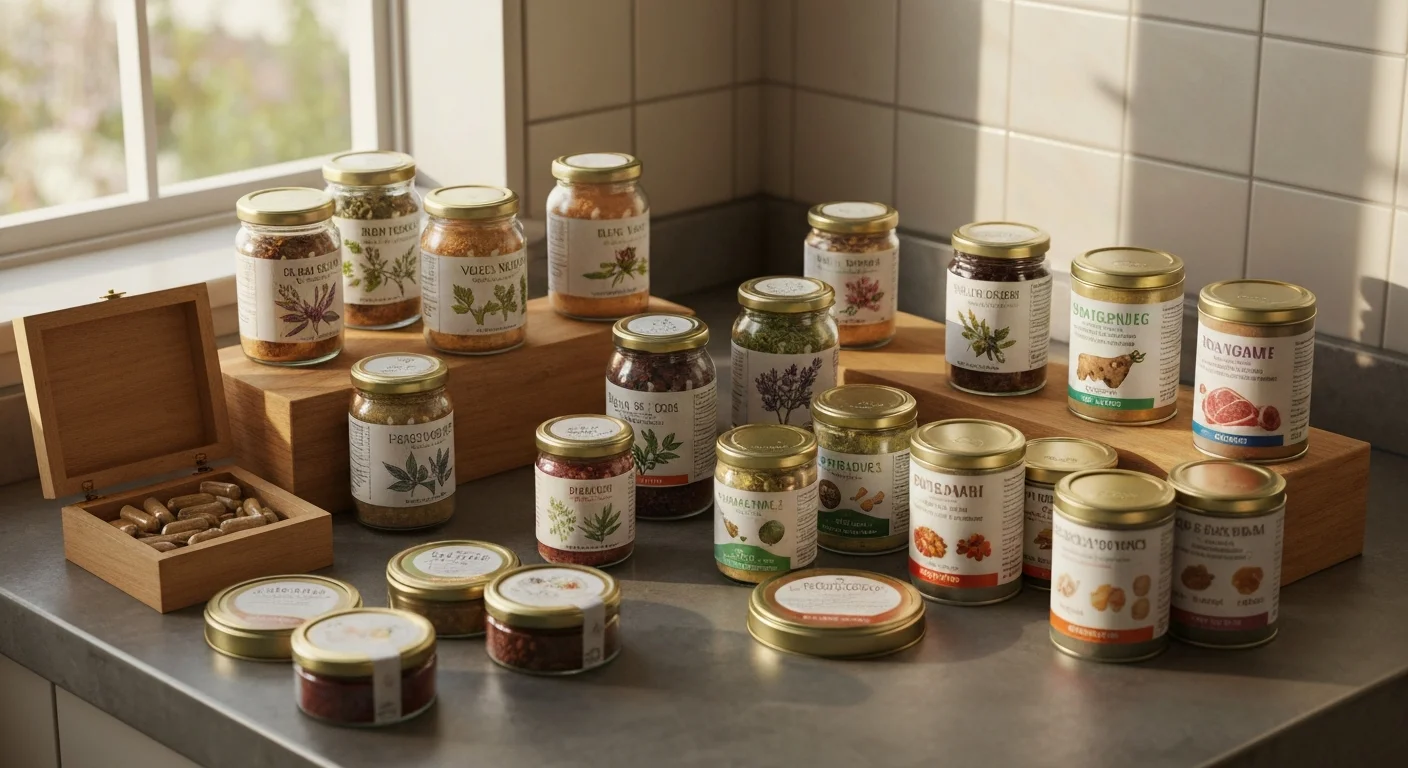
What she had not accounted for was the herbal supplement she had recently started giving the dog for joint support. The supplement contained compounds that inhibit P-glycoprotein function. Combined with a concurrent medication that was a mild P-glycoprotein substrate — not dangerous on its own in an MDR1-affected dog, but borderline — the P-glycoprotein inhibition from the supplement tipped the balance. The dog showed significant neurological signs that resolved only after the supplement was discontinued and the antibiotic course was completed.
The owner was careful, informed, and still nearly caused a serious adverse event because food and supplement interactions with P-glycoprotein are a largely uncharted territory in veterinary MDR1 education.
How P-Glycoprotein Inhibition Worsens MDR1 Risk
MDR1-affected dogs already lack functional P-glycoprotein. Introducing a P-glycoprotein inhibitor into the equation of an MDR1-affected dog seems paradoxical — how can you further inhibit a pump that is already absent or non-functional? The answer is that the picture is not always binary. Heterozygous carriers (N/M genotype) retain one functional copy of the MDR1 gene and produce some functional P-glycoprotein. These dogs have partial protection that differs from the zero protection of homozygous affected (M/M) dogs.
For carriers, P-glycoprotein inhibitors can effectively reduce their partial protection to near zero, making them as vulnerable as homozygous affected dogs. A carrier dog that has tolerated a low-dose macrocyclic lactone product without difficulty may, while receiving a strong P-glycoprotein inhibitor, develop toxicity from the same dose that was previously uneventful. This mechanism is not hypothetical — it mirrors what is well-documented in human medicine with drugs like digoxin and cyclosporine.
For homozygous affected dogs, who already have no functional P-glycoprotein for these inhibitors to affect, the primary concern is different. These dogs may be receiving medications that are mild P-glycoprotein substrates — drugs considered safe at the doses used because some endogenous pump activity in other tissues partially limits their CNS penetration. Adding a P-glycoprotein inhibitor can compromise even these residual mechanisms.
The Grapefruit Effect in Dogs
Human medicine has long recognized that grapefruit and grapefruit juice contain furanocoumarins that inhibit both CYP3A4 enzymes and P-glycoprotein, affecting the metabolism and disposition of dozens of drugs. The "grapefruit effect" is relevant to veterinary medicine, though grapefruit is not a typical component of canine diets.
However, grapefruit seed extract — marketed as a natural antimicrobial and antifungal supplement for dogs — is a concentrated source of the same inhibitory compounds. Owners who add grapefruit seed extract to their dog's diet for its purported antimicrobial properties may be inadvertently inhibiting P-glycoprotein in a dog whose medication protocol assumes normal pump function. This is not a theoretical risk — the active compounds in grapefruit seed extract have documented P-glycoprotein inhibitory effects.
Dogs with MDR1 mutations who are on any macrocyclic lactone product — even at the low heartworm prevention dose — should not receive grapefruit seed extract or other concentrated grapefruit-derived supplements. The potential for enhanced CNS penetration of the macrocyclic lactone through P-glycoprotein inhibition makes this combination inadvisable regardless of the dog's specific genotype.
Herbal Supplements as P-Glycoprotein Modulators
The supplement market for dogs has expanded dramatically, and many commonly used herbal products contain compounds with P-glycoprotein interactions that are relevant for MDR1-affected animals. The research base for these interactions in veterinary species is limited compared to human pharmacology, but the underlying biochemistry is shared.
St. John's Wort (Hypericum perforatum), sometimes used in dogs for behavioral support, is a P-glycoprotein inducer — it increases pump expression over time. This could theoretically be protective for MDR1 carriers, but the interaction is complex: short-term administration may inhibit P-glycoprotein transiently before the induction effect establishes. It also powerfully induces CYP3A4, which alters the metabolism of many conventional medications. St. John's Wort should not be given to any dog receiving medications with narrow therapeutic windows, regardless of MDR1 status.
Curcumin (turmeric extract), widely given to dogs as an anti-inflammatory supplement, has shown P-glycoprotein inhibitory effects in several in vitro studies. The clinical significance in dogs at typical supplemental doses is not firmly established, but the interaction is plausible. Dogs with MDR1 mutations who are receiving any P-glycoprotein substrate drug and are also receiving high-dose curcumin supplements warrant monitoring for drug effects.
Supplements with P-Glycoprotein Interaction Potential
Inhibitors (increase drug CNS penetration): Grapefruit seed extract, high-dose curcumin, quercetin, piperine (black pepper extract), certain green tea catechins. Inducers (may decrease drug CNS penetration long-term): St. John's Wort. Uncertain/complex interactions: Many commercial herbal blends with multiple botanical ingredients. When in doubt about any supplement for an MDR1-affected dog, consult a veterinary pharmacologist before administration.
Dietary Fat and Macrocyclic Lactone Absorption
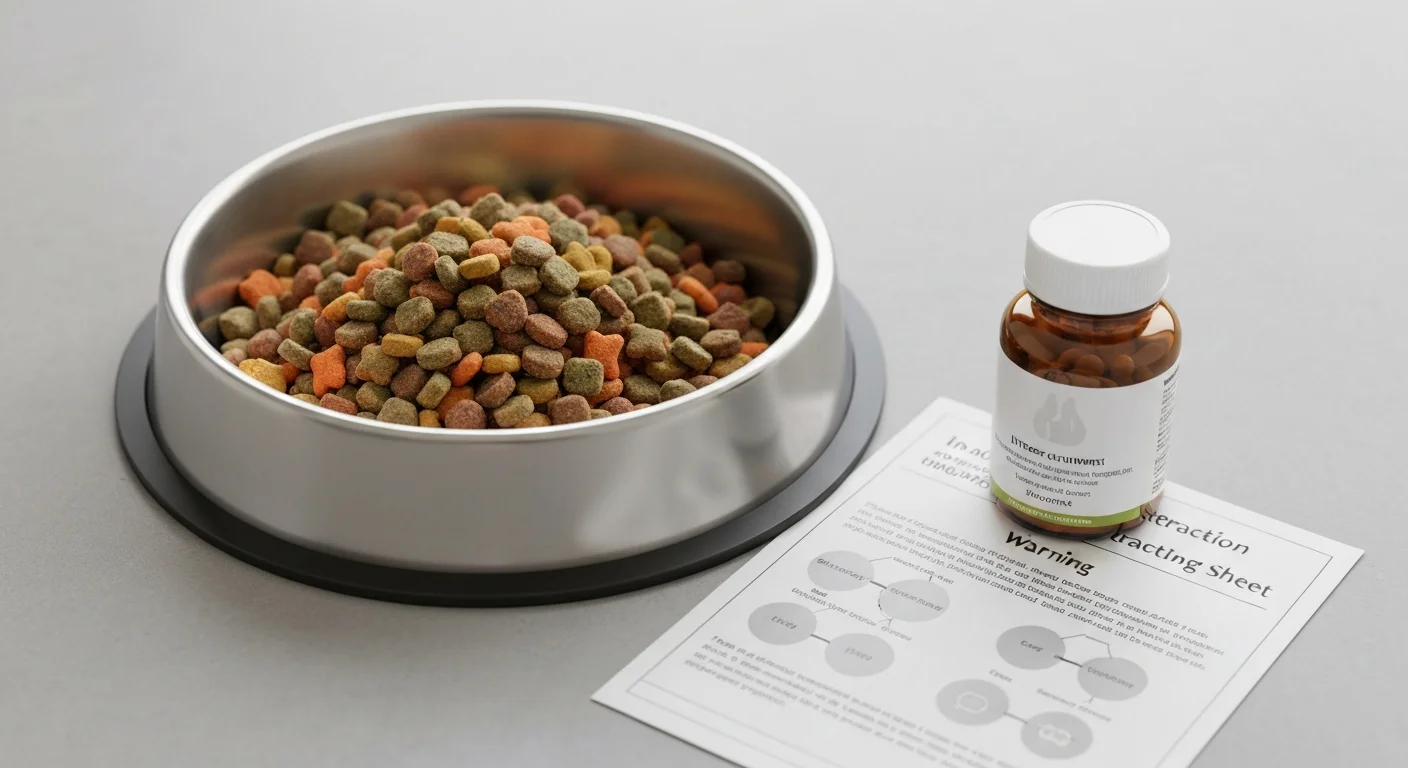
High-fat foods and fatty dietary supplements affect the absorption of macrocyclic lactones in a clinically relevant way. Ivermectin is highly lipophilic. Its oral bioavailability increases significantly when ingested with fat-containing food. In normal dogs, this increased absorption is largely compensated by P-glycoprotein pumping at the intestinal level and at the blood-brain barrier. In MDR1-affected dogs, this compensation is absent or reduced.
The practical implication is that an MDR1-affected dog receiving even a low-dose heartworm prevention product should not receive that product immediately after a high-fat meal or fatty supplement. The fat-enhanced absorption can push the effective dose above what the manufacturer tested and, while still below the level typically associated with clinical toxicity, represents a wider margin of variability in a population where margins are already narrow.
This same principle applies to accidental exposures. A dog who has accessed a livestock product will have faster and more complete ivermectin absorption if they have recently eaten a fatty meal. This is relevant to the exposure history assessment that should accompany any emergency evaluation of suspected macrocyclic lactone toxicity.
Omega-3 Fatty Acids and Fish Oil
Fish oil is among the most commonly administered canine supplements. The omega-3 fatty acids it provides, eicosapentaenoic acid (EPA) and docosahexaenoic acid (DHA), have beneficial anti-inflammatory effects and are widely recommended for skin, joint, and cardiovascular health in dogs. The interaction between fish oil supplementation and P-glycoprotein in MDR1-affected dogs is worth understanding.
Some research suggests that omega-3 fatty acids may modulate P-glycoprotein expression, but the evidence is mixed and the clinical significance in dogs at standard supplemental doses is not established. The primary concern with fish oil in the MDR1 context is its fat content and the fat-enhanced absorption mechanism described above, not direct P-glycoprotein inhibition at physiological doses. Standard fish oil supplementation is not contraindicated for MDR1-affected dogs, but high-fat supplementation schedules around macrocyclic lactone administration warrant some consideration.
When to Ask Your Veterinarian About Supplements
Owners of MDR1-affected dogs who are considering adding any supplement to their dog's routine should make this a topic for veterinary discussion rather than a unilateral decision. The veterinarian managing an MDR1-affected dog needs a complete picture of everything the dog is receiving, including supplements, to assess for drug interactions. The complete MDR1 drug list focuses on medications, but the supplement interaction issue is an important complementary concern.
The specific questions to raise with your veterinarian: Does this supplement contain any known P-glycoprotein inhibitors or inducers? Is my dog currently receiving any medications that would be affected by a change in P-glycoprotein function? Is the timing of this supplement relative to my dog's parasite prevention products a consideration? Are there alternatives that provide similar benefits without the P-glycoprotein interaction concern?
The Integrative Medicine Complication
Integrative and holistic veterinary medicine uses many compounds derived from natural sources that have real pharmacological activity. Chinese herbal formulas, Ayurvedic preparations, and other traditional medicine systems contain botanicals with well-documented P-glycoprotein interactions. An integrative veterinarian prescribing these preparations to an MDR1-affected dog should assess P-glycoprotein interaction potential as carefully as a conventional veterinarian would assess synthetic drug interactions.
The "natural" designation does not confer safety in the MDR1 context. A botanical compound that inhibits P-glycoprotein has the same functional effect on drug sensitivity as a synthetic P-glycoprotein inhibitor. Natural and synthetic distinctions are irrelevant to the protein's function. What matters is the biochemical interaction, regardless of the source compound.
For comprehensive safety in managing an MDR1-affected dog, all treating practitioners — conventional, integrative, or otherwise — need to be informed of the MDR1 status and the complete list of medications and supplements the dog is receiving. Coordination between practitioners is especially important when multiple therapeutic approaches are being used simultaneously. The principles of clear communication of MDR1 status apply equally to specialist and integrative consultations as to emergency encounters.
Building a Safe Supplement Protocol
Most owners of MDR1-affected dogs can maintain reasonable supplement protocols for their dogs with appropriate assessment and monitoring. The key steps are: documenting all supplements in the dog's veterinary record, reviewing the supplement list at every veterinary appointment, flagging any new supplement for assessment before starting it, and being aware of the timing of supplement administration relative to medications.
Dogs with MDR1 mutations are not pharmacologically fragile in all respects. Many supplements are entirely safe for these animals. The goal is not supplement avoidance but informed supplement use, with specific attention to the P-glycoprotein interaction mechanisms that create unique risks for this population. Understanding those mechanisms — and building a veterinary team that understands them with you — provides the foundation for confident, safe supplementation alongside appropriate medical management of your dog's health needs.