
The prescription came from a well-meaning veterinarian in a small rural practice. The owner of a Collie with a chronic skin condition had been struggling for months with the cost of the branded medication. The vet, trying to help, prescribed a compounded version at a fraction of the price. What the prescription did not carry — because compounded medications are not required to include the same warning labels as commercial products — was any indication that the active ingredient was a macrocyclic lactone that could kill an MDR1-affected dog.
The Collie was heterozygous for the MDR1 mutation. The dose was elevated due to the chronic skin condition being refractory to standard treatments. Three days after starting the compounded medication, the dog was in my emergency clinic with full-blown neurotoxicity. The veterinarian who prescribed it had not made the MDR1 connection. The compounding pharmacy had not flagged the concern. The owner had no idea. Everyone acted in good faith, and the dog nearly died.
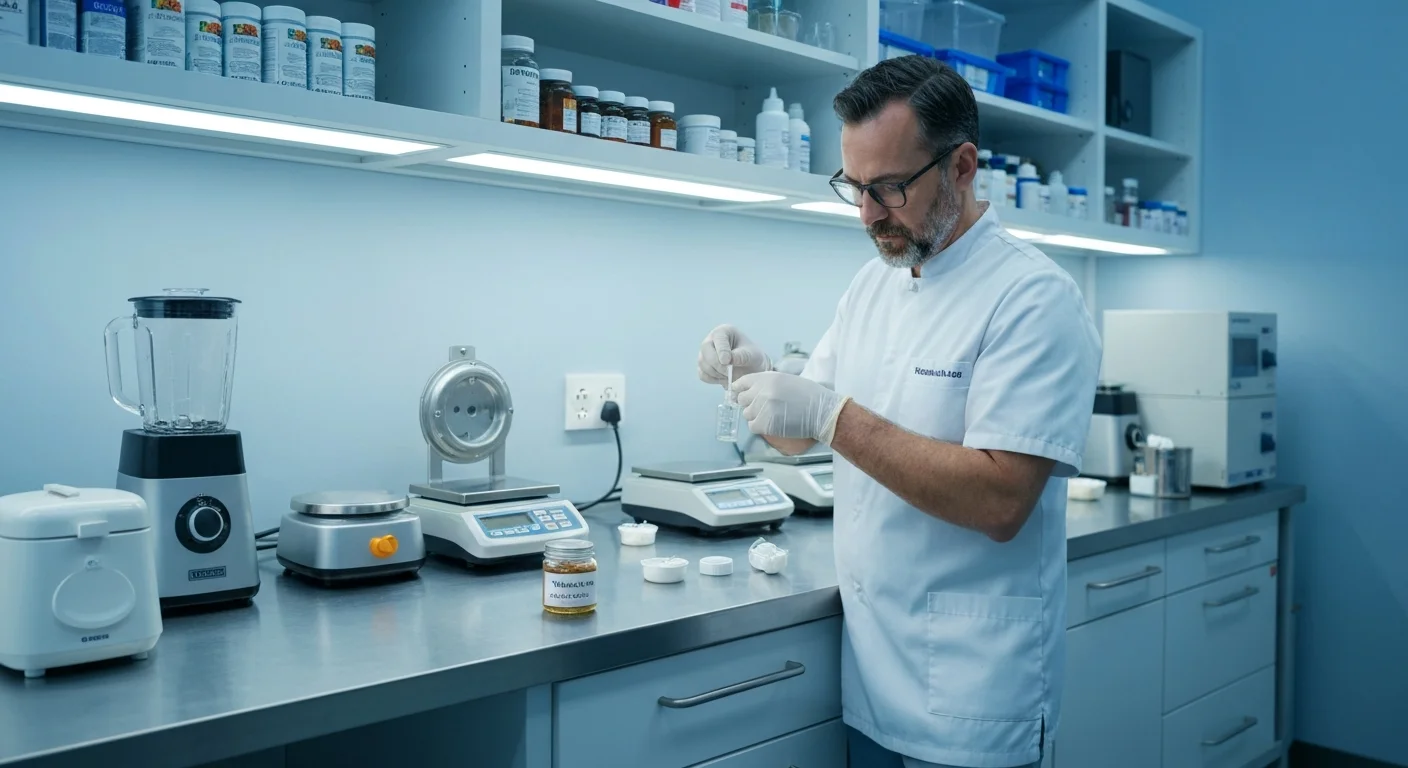
Why Compounded Medications Create Unique MDR1 Risks
Commercial medications that contain macrocyclic lactones and other MDR1-relevant drugs carry FDA-reviewed labeling that includes, at minimum, breed-specific warnings. These warnings are inadequate — they typically mention only Collies when the mutation affects dozens of breeds — but they exist as a prompt for prescribers and dispensers. Compounded preparations are formulated by individual pharmacies to a prescriber's specifications. They carry whatever labeling the compounding pharmacy creates, which varies enormously and is not subject to the same federal review process.
The practical result is that a compounded ivermectin preparation for mange treatment might be dispensed in a plain bottle with a label listing only the drug concentration and dosing schedule. There may be no breed-specific warning, no MDR1 reference, and no indication that this medication represents a life-threatening risk for a substantial portion of herding breed dogs. Owners who are vigilant about commercial product warnings have no comparable protection when compounded medications enter the picture.
Common Compounded Preparations That Affect MDR1 Dogs
Ivermectin is compounded most commonly for mange treatment, particularly demodicosis in dogs with recurrent or refractory infections. It may be compounded in oral suspension form, in topical formulations, or in injectable preparations. Each of these bypasses the standard commercial labeling system. The doses used for mange treatment are significantly higher than heartworm prevention doses, which increases the danger for MDR1-affected dogs proportionally.
Moxidectin is increasingly compounded for parasitic skin disease because it has a longer duration of action than ivermectin at comparable doses. Compounded moxidectin preparations for topical or oral use in chronic skin disease cases represent the same MDR1 hazard as ivermectin in a package that may be even less likely to carry appropriate warnings. For a full picture of which macrocyclic lactones pose risks, the guide to macrocyclic lactones to avoid covers the complete class with specific risk assessments for MDR1 dogs.
Beyond antiparasitics, several other drug classes relevant to MDR1 are compounded regularly in veterinary medicine. Loperamide for chronic diarrhea management is a P-glycoprotein substrate. Cyclosporine compounded at concentrations different from commercial formulations presents MDR1 risks that may not be anticipated. Pain management protocols involving certain opioids and multi-drug combinations can include MDR1-relevant agents in custom compounded formulations.
MDR1-Relevant Drug Classes Commonly Compounded
Macrocyclic lactones (ivermectin, moxidectin, milbemycin): Mange treatment, parasite control. Loperamide: Chronic diarrhea, colitis. Certain opioids (loperamide-based combinations): Pain management. Cyclosporine at non-standard concentrations: Immune-mediated disease. Certain chemotherapy agents in custom dosing: Oncology. Any of these in a compounded preparation requires explicit MDR1 risk assessment before use in herding breeds.
The Prescribing Veterinarian's Responsibility
When a veterinarian prescribes a compounded medication for a herding breed dog, the MDR1 status of that dog is a material fact that must inform the prescription decision. This is not a theoretical concern or an abundance of caution. It is a fundamental element of safe prescribing practice for the breeds affected by this mutation.
Practically, this means that before prescribing any compounded preparation containing a macrocyclic lactone or other MDR1-relevant drug, the prescribing veterinarian should have confirmed the dog's MDR1 status through genetic testing, obtained the breeding history and breed composition if the dog is a mixed breed, and documented their MDR1 risk assessment in the medical record. Prescribing without this information for herding breeds is not defensible from a standard-of-care perspective.
When the MDR1 status is unknown and genetic testing has not been performed, the default position should be treating the dog as potentially MDR1-affected. For mange treatment and other conditions requiring antiparasitic therapy, effective non-macrocyclic-lactone options exist. Miltefosine, lime sulfur dips, and certain formulations of fluralaner or afoxolaner represent alternatives that circumvent the MDR1 concern entirely while providing effective therapy.

What to Ask Your Compounding Pharmacy
Owners of MDR1-affected dogs who receive prescriptions from any compounding pharmacy should ask explicitly about the active ingredients and whether any carry MDR1 interaction concerns. A competent veterinary compounding pharmacist should be able to answer this question immediately and clearly. If they cannot, that is a signal that the pharmacy lacks the specialized knowledge required for safe veterinary compounding.
Specific questions worth asking: Does this compounded preparation contain any macrocyclic lactone? Does it contain loperamide or any opioid that is a known P-glycoprotein substrate? Are there any breed-specific contraindications for the active ingredient? Has the preparation been reviewed for MDR1 sensitivity given that my dog is of herding breed ancestry?
A pharmacy that cannot field these questions adequately is not an appropriate choice for medications given to MDR1-affected animals. The specialized knowledge required to safely compound medications for drug-sensitive breeds should be a selection criterion when choosing a compounding pharmacy for your dog's care.
Communicating MDR1 Status to Pharmacies
The most reliable protection against compounding pharmacy errors is ensuring that the MDR1 status is documented at every point in the prescription chain. This means having the prescribing veterinarian note the MDR1 status explicitly in the prescription. It means calling the compounding pharmacy directly before the medication is prepared to confirm they understand the constraint. It means keeping a copy of the MDR1 test result with the medical records that accompany the prescription.
For broader guidance on communicating MDR1 status to all healthcare providers, the guide to emergency clinic communication for MDR1 dogs covers protocols that apply equally well to routine pharmacy and specialist interactions. The communication principles are the same regardless of the clinical setting: the MDR1 status must be conveyed clearly and documented explicitly before any medication decision is made.
The Regulatory Gap
Veterinary compounding occupies a regulatory space that creates genuine safety risks for MDR1-affected animals. The Animal Medicinal Drug Use Clarification Act allows veterinarians to prescribe compounded medications when commercial alternatives are unavailable or impractical. The FDA oversees veterinary compounding but does not review individual compounded preparations for breed-specific safety concerns. State pharmacy boards regulate compounding pharmacies but typically lack the veterinary specialized knowledge to evaluate MDR1 risks in canine medications.
This regulatory gap means the responsibility falls entirely on the prescribing veterinarian and the compounding pharmacist. There is no regulatory backstop that catches MDR1-relevant medications before they reach drug-sensitive dogs. The safety net is the clinical judgment of the people involved in the prescription chain, which means that knowledge gaps at any point in the chain translate directly into animal harm.
Veterinary professional organizations have published guidelines on special patient populations including MDR1-affected breeds. These guidelines should be reviewed by any practitioner working with herding breeds or prescribing compounded medications for dogs of unknown breed composition.
Safe Compounding Practices for MDR1 Dogs
When compounded medications are genuinely necessary for an MDR1-affected dog, safe practice requires choosing active ingredients that are not P-glycoprotein substrates, confirming the concentration and formulation has been validated for safety in the MDR1-affected population, establishing clear monitoring parameters with the prescribing veterinarian, and having an emergency response plan if adverse reactions occur.
Many chronic conditions that drive compounded medication requests can be managed with MDR1-safe alternatives. The key is raising the MDR1 concern early in the treatment discussion, before a compounding prescription has been written and filled. Once an owner is holding a medication in hand, it becomes much harder to have the nuanced conversation about MDR1 risk that should have happened at the prescription stage.
The veterinary community has the knowledge to protect MDR1-affected dogs from compounding pharmacy risks. What is required is consistent application of that knowledge at every prescribing encounter with herding breeds. Understanding which of your dogs carry the mutation is the essential first step, which makes knowing your dog's MDR1 genetic status the foundation of every subsequent medication decision.